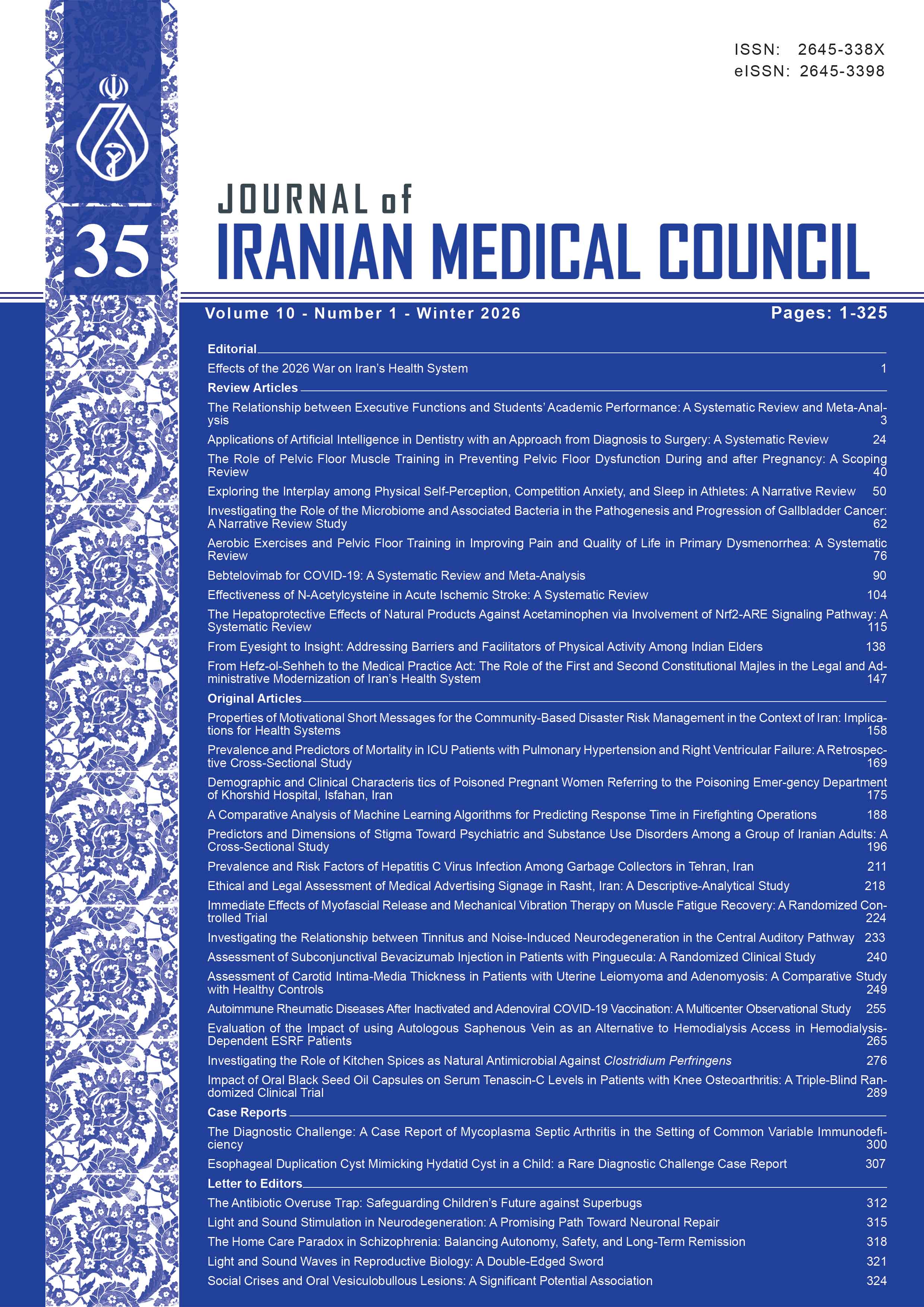
Document Type : Original article
Introduction
Until 2012, more than 80,000 chemicals were listed for use by the United States Environmental Protection Agency, and approximately 1,500 new chemicals are introduced into society each year (1). Any chemical that can disrupt human body physiology through its chemical activity is called a toxic substance (2). If such a toxic substance meets the human body for less than 24 hours, it is considered acute poisoning (3). Exposure can occur through ingestion, inhalation, or skin-mucous membrane contact (4), and it occurs both intentionally and unintentionally (5).
Acute poisoning has adverse effects on human health due to acute exposure (less than 4 hours) to toxic substances, drug overdoses, substance abuse problems, environmental and occupational toxins, biological factors, and toxicants (6). One important group exposed to these risks is pregnant women (7), as most chemicals can be transferred from the mother to the child through both placenta and breast milk. Furthermore, exposing the fetus to environmental toxins can lead to a wide range of adverse health outcomes throughout life and potentially affect future generations (8). While pregnancy was historically considered a protective factor against self-harm, recent data challenges this assumption. Recent studies highlight that suicide is now a leading cause of maternal mortality, often driven by underlying depression and psychosocial stressors that may escalate during the perinatal period (9).
A study in 2022 estimated that over two million people in the United States suffered from poisoning each year (4). In Canada (in 2019) during eight years, 0.28% of calls complaining about poisoning were from pregnant women (10), making poisoning the third leading cause of hospitalization during pregnancy (11).
Acute poisoning is a common method of self-harm in this population. Zipursky et al, in a large population-based study, reported rising rates of intentional self-poisoning during pregnancy, noting that these events are distinct from accidental exposures (12). Similarly, Shigemi et al analyzed nationwide data in Japan and found that drug overdose accounted for the majority of suicide attempts among pregnant women, significantly increasing the risks of adverse obstetric outcomes such as preterm birth and the need for cesarean section (13).
Despite these global trends, regional data is vital because the choice of toxic agents varies by culture and availability. In a study conducted across three hospitals in Turkey, Akgün Kavurmaci et al. found that the most frequently used medications include paracetamol, iron/folic acid supplements, and antidepressants (14). Recently, Koçakoğlu et al emphasized the need for identifying inflammatory markers to predict prognosis in these high-risk patients (15).
Poisoning during pregnancy can lead to maternal and fetal complications, including withdrawal syndromes in both mother and fetus, low birth weight, premature birth, stillbirth, in-utero fetal death due to seizures, and, ultimately, maternal death (10,11,16). According to Rakhshani and Naseri discoveries, pregnant women are considered one of the most vulnerable groups to both intentional and unintentional poisoning (17,18).
Some studies have reported that 0.2-0.8% of women experience opioid poisoning during pregnancy which is rare but also the cause of 11.4% of maternal mortality (19,20). Attempting suicide by self-poisoning during pregnancy is uncommon and usually involves drugs or other substances ingestion (21). The medical approach to acute poisoning in this group is an issue that needs to be handled sensitively due to the physiological changes of pregnancy and potential risks to the mother and fetus (22).
Given that previous studies on poisoned pregnant women were not found in Isfahan province, in this study the aim was to comprehensively evaluate the demographic profiles, clinical characteristics, toxicological patterns, and maternal-fetal outcomes of pregnant women presenting with acute poisoning to the Poisoning Emergency Department of Khorshid Hospital, the central referral center of Toxicology in Isfahan province.
Materials and Methods
The present study is a descriptive-cross-sectional study conducted in 2023 on pregnant women who were referred to the Emergency Department of Khorshid Hospital, the reference hospital for poisoning cases in Isfahan Province, over a period of six years, from March 21, 2017, to March 20, 2023. The study population consisted of all poisoned pregnant women (complete enumeration) who were identified and entered the study based on the inclusion criteria.
The inclusion criteria encompassed all pregnant women who were definitively diagnosed with poisoning by the attending physician. In this study, pregnant women were defined as those who were pregnant during their admission or those who remained within one month after the termination of their pregnancy, either due to childbirth or abortion.
The confirmation of pregnancy was based on a positive result in the serum beta-HCG test, compatible with pregnancy, or through an ultrasound test. Poisoning in pregnant women had to be conclusively diagnosed by a specialist physician in accordance with T36-T65 codes (poisoning by drugs, medicaments, and biological substances, toxic effects of substances chiefly non-medicinal as to source), external causes of morbidity and mortality codes: X40-X49 (accidental poisoning by and exposure to noxious substances), X60-X84 (intentional self-harm), and Y49-Y59 (drugs, medicaments and biological substances causing adverse effects in therapeutic use) as per the guidelines for diagnosing diseases in ICD-10, 2019 edition (19). In cases where patient records were incomplete and it was impossible to obtain the required information, those pregnant women were excluded from the study.
The data collection tool in this study was a checklist that was completed using patient medical records. It consisted of six sections which were demographic information, pregnancy status description, poisoning description, para-clinical results, treatment and treatment outcome, and fetal health status.
After obtaining the necessary permissions with scientific code 3402205 and ethical code IR.MUI.MED.REC.1402.151, the researchers visited the archives of Khorshid Hospital and identified all pregnant women who had been admitted with poisoning final diagnosis from March 21, 2017, to March 20, 2023.
In the end, out of 32,359 cases with a final diagnosis of poisoning over a period of six years, 57 pregnant women were identified and included in the study. Their data was described using Microsoft Excel 16. Quantitative data were described in mean and standard deviation, while qualitative data were described in distribution and frequency percentages.
Results
By examining 32,359 medical records over six years, 57 pregnant women (0.18%) with poisoning were identified. The number of pregnant women, categorized by year, is presented in table 1.
Table 1. The number of poisoned pregnant women per year
|
Time |
Admitted poisoning cases No. |
Admitted poisoned pregnant women No. |
Percentage (%) |
|
From March 21, 2017 to March 20, 2018 |
5359 |
7 |
0.13 |
|
From March 21, 2018 to March 20, 2019 |
6071 |
6 |
0.1 |
|
From March 21, 2019 to March 20, 2020 |
6876 |
14 |
0.20 |
|
From March 21, 2020 to March 20, 2021 |
2579 |
4 |
0.16 |
|
From March 21, 2021 to March 20, 2022 |
4194 |
9 |
0.21 |
|
From March 21, 2022 to March 20, 2023 |
7280 |
17 |
0.23 |
|
Total |
32359 |
57 |
0.18 |
Table 2 displays the demographic features of poisoned pregnant women. The average age of pregnant women was 27.77±7.16 years. Most of them (18 patients, 31.58%) got high school diplomas, while 55 patients (96.49%) were housewives. 44 patients (77.19%) were urban residents. 52 patients (91.23%) were married.
Table 3 demonstrates the characteristics of poisoned pregnant women. 7 patients (12.28%) experienced an abortion, and 3 of them delivered their babies within the month before hospital admission. The mean gestational age of 46 pregnant women was 13.34±9.8 weeks, revealing that most of them (22 patients 38.60%) were in their first trimester. 14 patients (24.56%) had addiction. An equal number of pregnant women, 14 patients (24.56%), had a history of suicide attempts and prior poisonings. Familial history of suicide attempts was positive in 3 patients (5.26%), and a single case (1.75%) had a history of criminal conviction. 22 patients (38.60%) had pharmaceutical consumption, while 9 patients (15.79%) had Underlying medical conditions. Most of the poisonings had happened in summer (29.82%).
In table 4, poisoning manners and types of poisons in pregnant women are presented. Out of the cases, 43 patients (75.44%) were poisoned with pharmaceutical drugs, while 10 patients (17.54%) were poisoned with pesticides and caustics. Additionally, 56 patients (98.25%) intentionally poisoned themselves during pregnancy.
Table 2. Demographic features of poisoned pregnant woman
|
Variables |
Category |
Frequency |
Percentage |
|
Age (years) |
|||
|
|
≤19 |
11 |
11.30 |
|
20-19 |
19 |
33.33 |
|
|
30-39 |
24 |
42.11 |
|
|
≥40 |
3 |
5.26 |
|
|
Mean±SD |
27.77±7.16 |
||
|
Educational level |
|||
|
|
Illiterate |
9 |
15.79 |
|
Less than high school |
10 |
17.54 |
|
|
High school diploma |
18 |
31.58 |
|
|
University degrees |
11 |
19.30 |
|
|
Missing |
9 |
15.79 |
|
|
Occupational status |
|||
|
|
Business |
1 |
1.75 |
|
Employee |
1 |
1.75 |
|
|
Housewife |
55 |
96.49 |
|
|
Residency status |
|||
|
|
Urban |
44 |
77.19 |
|
Rural |
13 |
22.81 |
|
|
Marital status |
|||
|
|
Married |
52 |
91.23 |
|
Single |
3 |
5.26 |
|
|
Divorced |
2 |
3.51 |
|
Among the cases of poisoning, 27 cases (47.37%) were due to multi-drug poisoning, and 7 cases (12.28%) were poisoned by unspecified medications. In table 5, different classes of drugs responsible for poisoning are described. The largest drug class belonged to sedative-hypnotics and muscle relaxants, accounting for 19 cases (33.34%) of the total.
Figure 1 illustrates the types of pesticides causing poisoning. 9 pregnant women (15.79%) were poisoned due to pesticides. The majority of cases were related to the class of insecticides with 4 cases (44%).
Table 6 displays the vital signs of poisoned pregnant women. There were 16 patients who were admitted to the hospital after 24 hr.
Table 3. Characteristics of poisoned pregnant women
|
Variables |
Category |
Frequency |
Percentage |
|
Obstetrics history |
Abortion within the previous month |
7 |
12.28 |
|
Delivery within the previous month |
3 |
5.26 |
|
|
Pregnant |
47 |
82.46 |
|
|
Gestational age (weeks) |
First trimester |
22 |
38.60 |
|
Second trimester |
16 |
28.07 |
|
|
Third trimester |
7 |
12.28 |
|
|
Missing |
2 |
3.51 |
|
|
Mean±SD |
13.34±9.8 |
||
|
History of addiction |
Has |
14 |
24.56 |
|
Does not have |
43 |
75.44 |
|
|
Previous suicide attempt |
Has |
14 |
24.56 |
|
Does not have |
43 |
75.44 |
|
|
Previous poisoning |
Has |
14 |
24.56 |
|
Does not have |
43 |
75.44 |
|
|
Criminal conviction |
Has |
1 |
1.75 |
|
Does not have |
56 |
98.25 |
|
|
Familial history of suicide attempts |
Has |
3 |
5.26 |
|
Does not have |
54 |
94.74 |
|
|
Pharmaceutical consumption |
Has |
22 |
38.60 |
|
Does not have |
35 |
61.40 |
|
|
Underlying medical conditions |
Hypothyroidism |
4 |
7.02 |
|
Diabetes mellitus type 2 |
1 |
1.75 |
|
|
Asthma |
1 |
1.75 |
|
|
Depressive disorder |
1 |
1.75 |
|
|
Fatty liver |
1 |
1.75 |
|
|
Migraine headaches |
1 |
1.75 |
|
|
Does not have |
48 |
84.21 |
|
|
Season of hospital admission |
Summer |
17 |
29.82 |
|
Spring |
14 |
24.56 |
|
|
Winter |
14 |
24.56 |
|
|
Autumn |
12 |
21.05 |
|
Table 4. Poisoning manners and types of poisons
|
Variables |
Category |
Frequency |
Percentage |
|
Manner of poisoning |
Intentional |
56 |
98.25 |
|
Unintentional |
1 |
1.75 |
|
|
Type of poison |
Pharmaceutical drugs |
43 |
75.44 |
|
Pesticides and caustics |
10 |
17.54 |
|
|
Methadone |
5 |
8.77 |
|
|
Amphetamine |
5 |
8.77 |
|
|
Alcohol |
2 |
3.51 |
|
|
Tramadol |
2 |
3.51 |
Table 5. Drug classes’ frequency
|
Drug Class |
Frequency |
Percentage (%) |
Drug name |
Frequency (percentage) |
|
Sedative-Hypnotics |
17 |
29.82 |
Alprazolam |
6(10.53%) |
|
Clonazepam |
5(8.77%) |
|||
|
Chlordiazepoxide |
3(5.26%) |
|||
|
Diazepam |
1(1.75%) |
|||
|
Zolpidem |
1(1.75%) |
|||
|
Unknown BZD |
1(1.75%) |
|||
|
Analgesics (APAP, ASA, NSAIDs) |
15 |
26.32 |
Acetaminophen |
9(15.79%) |
|
Aspirin |
2(3.51%) |
|||
|
Diclofenac |
2(3.51%) |
|||
|
Meloxicam |
1(1.75%) |
|||
|
Indomethacin |
1(1.75%) |
|||
|
Antidepressants |
14 |
24.56 |
Nortriptyline |
3(5.26%) |
|
Escitalopram |
3(5.26%) |
|||
|
Amitriptyline |
3(5.26%) |
|||
|
Citalopram |
1(1.75%) |
|||
|
Sumatriptan |
1(1.75%) |
|||
|
Fluoxetine |
1(1.75%) |
|||
|
Doxepin |
1(1.75%) |
|||
|
Unknown TCA |
1(1.75%) |
|||
|
Vitamins & Supplements |
10 |
17.54 |
Folic acid |
3(5.26%) |
|
Vitamin D3 |
2(3.51%) |
|||
|
Multi-Vitamin |
1(1.75%) |
|||
|
Vitamin B6 |
1(1.75%) |
|||
|
Vitamin B3 |
1(1.75%) |
|||
|
Vitamin B1 |
1(1.75%) |
|||
|
Livergol |
1(1.75%) |
|||
|
Opioids |
7 |
12.28 |
Methadone |
3(5.26%) |
|
Tramadol |
2(3.51%) |
|||
|
Diphenoxylate |
1(1.75%) |
|||
|
Codeine |
1(1.75%) |
|||
|
Anti-cholinergic/ Antihistamines |
5 |
8.77 |
Ranitidine |
1(1.75%) |
|
Dicyclomine |
1(1.75%) |
|||
|
Chlorpheniramine |
1(1.75%) |
|||
|
Cetirizine |
1(1.75%) |
|||
|
Loratadine |
1(1.75%) |
|||
|
CNS stimulants |
5 |
8.77 |
Amphetamine |
4(7.02%) |
|
Methylphenidate (Ritalin) |
1(1.75%) |
|||
|
Hormones & hormone-like substances |
5 |
8.77 |
LD |
2(3.51%) |
|
Levothyroxine |
1(1.75%) |
|||
|
Levonorgestrel |
1(1.75%) |
|||
|
Misoprostol |
1(1.75%) |
|||
|
Antipsychotics |
3 |
5.26 |
Perphenazine |
1(1.75%) |
|
Clozapine |
1(1.75%) |
|||
|
Quetiapine |
1(1.75%) |
|||
|
Others* |
14 |
24.56 |
|
|
*Other drug classes include: metals and metalloids (2 cases), antibiotics (2 cases), beta-blockers (2 cases), anti-acids (2 cases), sympathomimetics (1 case), serotonin 5-HT3 receptor antagonists (1 case), corticosteroids (1 case), skeletal muscle relaxants (Baclofen, 1 case), vasodilators (Isoxsuprine, 1 case; Nitrocontin, 1 case).
Acute poisoning management and its outcome in poisoned pregnant women are presented in table 7. All of them received stabilization actions. One (1.75%) required emergency cesarean section. She was a 22-year-old mother with a gestational age of 38 weeks who had ingested an unknown amount of paraquat herbicide one and a half hours before admission to the hospital, with the intention of committing suicide. An immediate order for an emergency cesarean section was issued for her. During the cesarean section, she received 2 units of packed cells, followed by anti-dote therapy, and underwent hemodialysis three times. Her newborn was transferred to the neonatal ward for further care. Fortunately, after 6 days, both the mother and her newborn were discharged from the hospital without complications. 55 poisoned pregnant women (96.49%) had an uneventful recovery. One had aspiration pneumonia and the other experienced an abortion due to poisoning. 24 cases (42.11%) had normal sonograms. Laboratory variables, including CBC diff, VBG, electrolytes (Ca-K-Na), coagulation tests (INR-PTT-PT), liver enzymes (ALP-ALT-AST), BUN, Cr, and blood glucose levels, were extracted and recorded from the medical records upon admission and after 24 hr. The averages of these variables were all within the normal ranges.
48 poisoned pregnant women (84.21%) benefited from antidotes. NAC (N-acetylcysteine) was prescribed more than any other antidote with the exception of activated charcoal. The types of prescribed antidotes are shown in table 8.
Table 6. Vital signs of poisoned pregnant women
|
Variables |
Category |
Frequency |
Percentage |
|
At arrival |
|||
|
Consciousness level |
Alert |
40 |
70.18 |
|
Drowsy |
12 |
21.05 |
|
|
Comatose |
5 |
8.77 |
|
|
Mean arterial blood pressure (mmHg) |
Mean±SD |
103.04±11.45 |
|
|
Temperature (˚C) |
Mean±SD |
36.89±0.22 |
|
|
Respiratory rate (per min) |
Mean±SD |
17.68±3 |
|
|
Pulse rate (per min) |
Mean±SD |
86.19±11 |
|
|
Pulse oxygen saturation (%) |
Mean±SD |
95.77±1.8 |
|
|
6 hr later |
|||
|
Consciousness level |
Alert |
53 |
92.98 |
|
Drowsy |
2 |
3.51 |
|
|
Comatose |
2 |
3.51 |
|
|
Mean arterial blood pressure (mmHg) |
Mean±SD |
99.18±10.52 |
|
|
Temperature (˚C) |
Mean±SD |
36.89±0.22 |
|
|
Respiratory rate (per min) |
Mean±SD |
17.68±3 |
|
|
Pulse rate (per min) |
Mean±SD |
86.19±11 |
|
|
Pulse oxygen saturation (%) |
Mean±SD |
95.77±1.8 |
|
|
24 hr later |
|||
|
Consciousness level |
Alert |
14 |
87.5 |
|
Drowsy |
0 |
- |
|
|
Comatose |
2 |
12.5 |
|
|
Mean arterial blood pressure (mmHg) |
Mean±SD |
99.06±6.29 |
|
|
Temperature (˚C) |
Mean±SD |
37.01±0.15 |
|
|
Respiratory rate (per min) |
Mean±SD |
18±4.20 |
|
|
Pulse rate (per min) |
Mean±SD |
87±9.06 |
|
|
Pulse oxygen saturation (%) |
Mean±SD |
96±2.99 |
|
Table 7. Acute poisoning management and its outcome in poisoned pregnant women
|
Variables |
Category |
Frequency |
Percentage |
|
Time of arrival to the hospital since the poisoning (hr) |
Mean±SD |
5.17±5.68 |
|
|
Signs and symptoms on arrival to the hospital |
Symptomatic |
20 |
35.09 |
|
Asymptomatic |
37 |
64.91 |
|
|
Injuries coexisting with the poisoning |
Superficial injuries |
6 |
10.53 |
|
No other injury |
51 |
89.47 |
|
|
Treatment |
Stabilization actions |
57 |
100 |
|
Single-dose activated charcoal |
45 |
78.95 |
|
|
Gastric lavage |
34 |
59.65 |
|
|
Antidote administration except activated charcoal |
14 |
24.56 |
|
|
Multiple-dose activated charcoal |
1 |
1.75 |
|
|
Hemodialysis |
1 |
1.75 |
|
|
Emergent cesarean section |
1 |
1.75 |
|
|
Length of hospital stays (hr) |
Mean±SD |
27.07±23.60 |
|
|
Sonogram results |
Normal * |
24 |
42.11 |
|
Abnormal |
2 |
3.51 |
|
|
Not performed |
31 |
54.39 |
|
|
Treatment outcome |
Cure without complication |
55 |
96.49 |
|
Cure with complication |
2 |
3.51 |
|
|
Death |
0 |
0 |
|
|
Hospital discharge type |
Planned discharge |
48 |
84.21 |
|
Discharged against medical advice |
8 |
14.04 |
|
|
Transmission to another hospital |
1 |
1.75 |
|
*“Normal” sonography results refer to the confirmation of fetal viability (presence of fetal heart rate), normal amniotic fluid volume, and absence of acute placental complications.
Table 8. Prescribed antidotes for poisoned pregnant women
|
Variables |
Category |
Frequency |
Percentage |
|
Antidotes |
Activated charcoal |
46 |
80.70 |
|
N-acetyl cysteine (NAC) |
7 |
12.28 |
|
|
Bicarbonate |
3 |
5.26 |
|
|
Naloxone |
3 |
5.26 |
|
|
Pralidoxime |
2 |
3.51 |
|
|
Atropine |
2 |
3.51 |
|
|
Naltrexone |
1 |
1.75 |
|
|
Total |
48 |
84.21 |
Discussion
Poisoning is a major public health issue worldwide, with significant implications for the well-being of populations. It can lead to fatalities and significant health consequences (20). According to a recent report from the World Health Organization (WHO) (23), thousands of people lose their lives annually due to unintentional poisonings (24), with over 90% of these deaths occurring in developing countries (25).
The pattern and prevalence of poisoning incidents vary considerably due to various factors. Sociodemographic factors, cultural diversity, and the distribution of toxic substances contribute to this variation, even within the same country (26). The prevalence of poisoning in a specific region is influenced by factors such as the availability of toxic agents, prevalent occupations in the community, and the influence of religious and socio-cultural beliefs (27). Furthermore, in less developed countries, inadequate regulation of pharmaceutical and chemical products, insufficient surveillance systems, weak enforcement of safety measures, and easy access to various drugs and chemicals contribute to a higher prevalence of poisonings (28).
In the present study, 98.2% of cases were intentional suicide attempts. This rate is notably higher than figures reported in some Western cohorts. For instance, Zipursky et al reported that 68% of poisoning hospitalizations were intentional (11). However, the present findings align with the high burden of maternal mental health issues described by Mangla et al, suggesting that in Isfahan region, acute poisoning in pregnancy is almost exclusively a psychiatric emergency rather than an accidental occurrence (9).
Regarding clinical outcomes, the majority of the present patients recovered with supportive care. However, prognosis is strictly dependent on the toxic agent.
The authors observed that patients ingesting pesticides (e.g., Paraquat) experienced significantly higher morbidity, necessitating intensive interventions such as hemodialysis and emergency termination of pregnancy. This mirrors the findings of Shigemi et al, who noted that severe suicide attempts are associated with urgent obstetrical interventions (10). While Koçakoğlu et al recently suggested using inflammatory markers (NLR/PLR) to stratify risk, present study clinical data suggests that the ‘type of agent’ remains the strongest immediate predictor of hospital length of stay and intensive care requirement (15). Specifically, pesticide ingestion was associated with prolonged hospitalization and invasive procedures compared to the pharmaceutical group
Acute poisoning is an emergency condition that necessitates immediate medical attention to manage patients which is based on the toxicant. Designing a rational treatment plan for these patients requires consideration of various factors, such as the amount of exposure, time elapsed since exposure, clinical symptoms, patient background factors, geographical location, and available resources (29,30).
Also, toxic agents and the patterns of acute poisoning can vary significantly among different regions and may change over time (31). Thus, there is a continuous need for up-to-date information on acute poisoning specific to each region. This information is crucial for effective planning, rational resource allocation, and evaluating public health interventions (32). On the other hand, pregnant women are one of the important groups who may face irreversible consequences when exposed to toxic substances (10,11).
Regarding the type of toxic agents, Chen et al reported that alcohol is a predominant cause of poisoning in China, particularly among young people where substance abuse is frequent (33). In contrast, the present study found alcohol involvement to be minimal. This discrepancy is likely due to cultural prohibitions against alcohol in Iran and the tendency for women to abstain from alcohol consumption during pregnancy to protect fetal health.
Bermejo et al noted that the COVID-19 pandemic led to an increase in suicide attempts by poisoning in Spain (34). The findings of the present align with this observation, as a high prevalence of poisoning was noted with suicidal intention during the pandemic years covered in this study.
Consistent with Lynn et al, who identified pharmaceutical drugs as the leading cause of mortality in women (35), present study data confirmed that medications were the primary toxic agents. Similarly, Lekei et al found that in young women, the most common manner of poisoning was suicide involving pesticides (36). While this study found pharmaceuticals to be more common than pesticides; the results are in line with the high intentional nature of poisoning observed in this demographic.
Comparisons with local studies reveal distinct demographic patterns. Hashemizadeh et al studied the general population in northeastern Iran and found that while pharmaceuticals were the most common cause, the rate of suicidal intent was lower than what was observed (37). In this cohort of pregnant women, the intention for self-harm was remarkably higher, and the history of prior suicide attempts was more frequent, suggesting that pregnancy may be a period of heightened psychological vulnerability compared to the general population.
Conversely, Rezaei’s study on elderly patients indicated that the majority of poisonings were non-intentional, with opioids being the most common agent (38). This stands in sharp contrast to the findings of the present study, where intentional self-poisoning with pharmaceutical drugs was the dominant presentation. This comparison highlights that unlike the geriatric population, where accidental overdose is a primary concern, the pregnant demographic requires clinical focus on intentional self-harm and psychiatric evaluation.
Strengths and Limitations
The primary strength of this study lies in its sampling method; utilizing a census approach over a six-year period at a provincial referral center minimizes selection bias and provides a comprehensive epidemiological profile of this rare clinical presentation in the region. Screening over 32,000 medical records ensured that all eligible cases were captured. However, the study has limitations inherent to its retrospective design, including missing data in medical records (such as specific socioeconomic details) and the inability to assess long-term teratogenic effects on the fetus post-discharge. Additionally, as a single-center study, the findings may not be fully generalizable to regions with different cultural patterns of substance use. Finally, while the sample size represents a complete enumeration of cases, the rarity of acute poisoning in pregnancy limited the statistical power required for more complex multivariate analyses.
Additionally, due to the retrospective nature of the data collection from emergency records, detailed psychological profiling and assessment of underlying mental health disorders were not available, limiting the analysis to documented history of addiction and prior suicide attempts.
Conclusion
Although acute poisoning among pregnant women in this region is relatively rare (0.18%), this study uncovers a concerning pattern: the overwhelming majority of cases were intentional suicide attempts involving pharmaceutical agents. The significant prevalence of prior addiction and history of suicide attempts among these patients highlights a vulnerable demographic with underlying psychiatric instability. While maternal and fetal physical outcomes were largely favorable due to effective medical management, the high intent for self-harm warrants urgent attention.
Consequently, clinical management must extend beyond toxicological stabilization to include rigorous psychiatric evaluation. Authors strongly recommend integrating mental health screening—specifically for depression, substance abuse, and suicidal ideation—into routine prenatal care protocols. Furthermore, preventive strategies should not be limited to pre-marital counseling; they must involve continuous monitoring by obstetricians and family physicians to identify high-risk women early and restrict their access to potentially lethal medications.
Conflict of Interest
Authors declare no conflict of interest.